La présélection informelle des directions d’école : comprendre la pratique de la « tape sur l’épaule » dans les écoles de langue française de l’Ontario
DOI:
https://doi.org/10.53967/cje-rce.6895Keywords:
informal preselection, shoulder tapping, school principals, recruitment and selection, French-language schools in OntarioAbstract
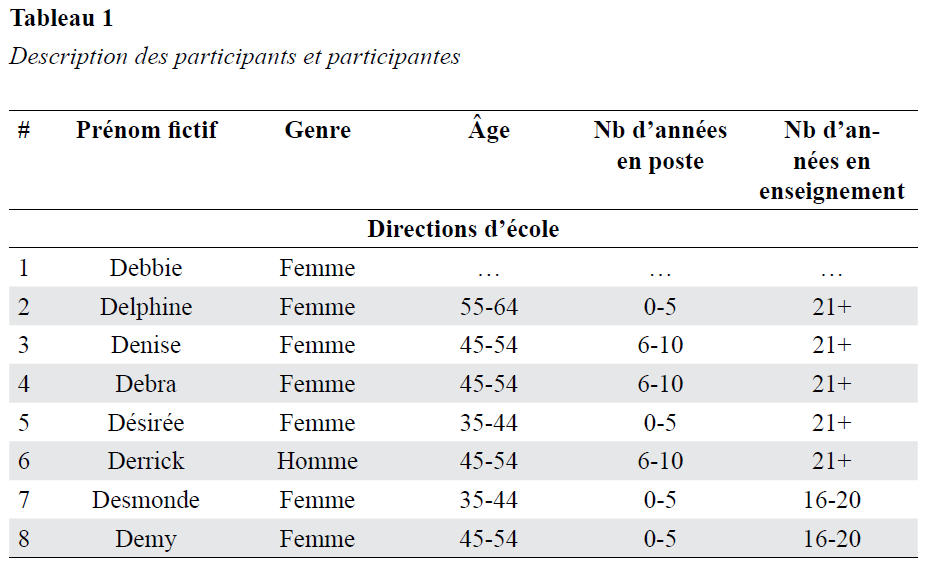
This qualitative study examines the practice of informal preselection for principal positions in Ontario’s French-language schools. Faced with a dwindling pool of candidates for principal positions, an informal strategy known as shoulder tapping is used within the school system to attract candidates for these positions. Our research objective is to identify the actions considered as shoulder tapping in accessing a principal position. It is based on semi-structured interviews with 11 principals and assistant principals and six teachers. The findings suggest three main actions that participants viewed as informal preselection: acknowledging one’s competencies, offering advice on how to access the position, and offering informal mentoring. Turner’s (1960) theoretical framework of organizational mobility allows the study to explain how these informal practices can both support and limit the upward mobility of individuals within the organization.
Metrics
References
Abdellah, H. R. A. (2021). Managerial succession planning for school principals. International Journal of Research in Educational Sciences, 4(3), 201–228. http://iafh.net/index.php/IJRES/article/view/246
Anderson, S. E. (2010). Moving change: Evolutionary perspectives on educational change. Dans A. Hargreaves, A. Lieberman, M. Fullan et D. Hopkins (dir.), Second international handbook of educational change (vol. 23, p. 65–84). Springer. https://doi.org/10.1007/978-90-481-2660-6_4
Aravena, F. (2020). Principal succession in schools: A literature review (2003–2019). Educational Management Administration & Leadership, 50(3), 354–370. https://doi.org/10.1177/1741143220940331
Archambault, J. et Garon, R. (2013). How principals exercise transformative leadership in urban schools in disadvantaged areas in Montréal, Canada. International Studies in Educational Administration, 41(2), 49–66. http://hdl.handle.net/1866/12679
Armstrong, D. E. (2014, avril). Rapport sur la transition au rôle de direction d’école et de direction adjointe [Rapport]. Institut de leadership en éducation. https://www.education-leadership-ontario.ca/application/files/3714/9452/5370/Transition_au_role_de_direction_decole_et_direction_adjointe.pdf
Avenier, M.-J. et Gavard-Perret, M.-L. (2012). Inscrire son projet de recherche dans un cadre épistémologique. Dans M.-L. Gavard-Perret, D. Gotteland, C. Haon et A. Jolibert (dir.), Méthodologie de la recherche en sciences de gestion : réussir son mémoire ou sa thèse (2e éd., p. 11-62). Pearson.
Bailey, S. et Qualls, B. (2018). Through the looking glass: Comparing superintendents’ preferred principal characteristics to ELCC and Texas principal standards. AASA Journal of Scholarship & Practice, 15(2), 4–16. https://www.aasa.org/docs/default-source/publications/journal-of-scholarship-and-practice/2018-jsp/comparing-superintendents-preferred-principal-characteristics-to-elcc-and-texas-principal-standards.pdf?sfvrsn=d91da09f_5
Berger, M. J. (2017). Éducation en langue française de l’Ontario. Regards croisés sur les pratiques de leadership [Rapport final]. Institut de leadership en éducation. https://www.education-leadership-ontario.ca/application/files/4615/0903/4962/Education_en_langue_francaise_de_lOntario.pdf
Blackmore, J., Thomson, P. et Barty, K. (2006). Principal selection: Homosociability, the search for security and the production of normalized principal identities. Educational Management Administration & Leadership, 34(3), 297–317. https://doi.org/10.1177/1741143206065267
Bush, T. (2011). Succession planning and leadership development for school principals: Comparing English and South African approaches. Compare: A Journal of Comparative and International Education, 41(6), 785–800. https://doi.org/10.1080/03057925.2011.595968
Cieminski, A. B. (2018). Practices that support leadership succession and principal retention. Education Leadership Review, 19(1), 21–41. http://eric.ed.gov/?id=EJ1200804
Clune, C. K. (2008, 27 juin). Planification de la relève : écoles et conseils scolaires [Rapport final]. Institut de leadership en éducation. https://www.education-leadership-ontario.ca/application/files/7614/9460/1548/Planification_de_la_releve_pour_le_leadership_dans_les_ecoles_et_conseils_scolaires_ontariens_-_Rapport_Final.pdf
Creswell, J. W. et Plano Clark, V. L. (2017). Designing and conducting mixed methods research (3e éd.). SAGE.
Doneley, L., Jervis-Tracey, P. et Sim, C. (2018). Principal succession and recruitment: Trends and challenges. Leading and Managing, 24(1), 59–72. https://search.informit.org/doi/10.3316/aeipt.221412
Fink, D. (2011). Pipelines, pools and reservoirs: Building leadership capacity for sustained improvement. Journal of Educational Administration, 49(6), 670–684. https://doi.org/10.1108/09578231111174811
Foka, M. et IsaBelle, C.. (2024). La présélection informelle comme stratégie organisationnelle pour contrer la pénurie de directions d’école franco-ontariennes. Éducation et francophonie, 52(2). https://doi.org/10.7202/1115410ar
Gaudet, S. et Robert, D. (2018). L’aventure de la recherche qualitative : du questionnement à la rédaction scientifique. Presses de l’Université d’Ottawa.
Gélinas-Proulx, A. et Shields, C. M. (2016). Le leadeurship transformatif : maintenir la langue française vivante au Canada. Revue canadienne de l’éducation, 39(1), 1–24. https://journals.sfu.ca/cje/index.php/cje-rce/article/view/2017
Gélinas-Proulx, A., Dulude, É. et Soulard, N. (2020). La gouvernance et la gestion de l’éducation : les cas de l’Ontario et du Québec. Administration et Éducation, 165(1), 87–94. https://doi.org/10.3917/admed.165.0087
Gérin-Lajoie, D. et Jacquet, M. (2008). Regards croisés sur l’inclusion des minorités en contexte scolaire francophone minoritaire au Canada. Éducation et francophonie, 36(1), 25–43. https://doi.org/10.7202/018088ar
Gronn, P. et Lacey, K. (2010). Cloning their own: Aspirant principals and the school-based selection game. Dans S. G. Huber (dir.), School leadership - International perspectives (p. 303–330). Springer. https://doi.org/10.1007/978-90-481-3501-1_15
Hallinger, P. et Heck, R. H. (2011). Collaborative leadership and school improvement: Understanding the impact on school capacity and student learning. Dans T. Townsend et J. MacBeath (dir.), International handbook of leadership for learning (p. 469–485). Springer. https://doi.org/10.1007/978-94-007-1350-5_27
Harchar, R. L. et Campbell, K. T. (2010). University-district partnership for implementing school leader succession planning. International Journal of Organizational Innovation, 3(1), 91–115. https://www.ijoi-online.org/attachments/article/1/Microsoft%20Word%20-%20FINAL%20ISSUE%20VOL%203%20NUM%201%20SUMMER%202010.pdf
Hargreaves, A. et Fink, D. (2011). Succeeding leaders: Supply and demand. Dans R. E. White et K. Cooper (dir.), Principals in succession: Transfer and rotation in educational administration (vol. 13, p. 11–26). Springer. https://doi.org/10.1007/978-94-007-1275-1_3
Huber, S. G. et Hiltmann, M. (2010). The recruitment and selection of school leaders – First findings of an international comparison. Dans S. G. Huber (dir.), School leadership—International perspectives (vol. 10, p. 303–330). Springer. https://doi.org/10.1007/978-90-481-3501-1_16
IsaBelle, C. et Labelle, J. (2017). Rôles, responsabilités, pratiques et compétences des directions d’école. Revue des sciences de l’éducation, 43(2), 1–14. https://doi.org/10.7202/1043024ar
Leithwood, K. et Jantzi, D. (2006). Transformational school leadership for large-scale reform: Effects on students, teachers, and their classroom practices. School Effectiveness and School Improvement, 17(2), 201–227. https://doi.org/10.1080/09243450600565829
Logan, C. D. (2018). A critique of school board selection practices and the under-representation of racialized educators in the principalship (publication no 10937124) [Thèse de doctorat, University of Toronto]. ProQuest Dissertations & Theses.
Maatouk, Z. (2021). Directions d’école catholique de langue française : indicateurs de deux compétences pour la promotion de leurs mandats spécifiques [Thèse de doctorat, Université d’Ottawa]. uOttawa. http://dx.doi.org/10.20381/ruor-25914
Melton, L. C. (2018). Succession planning research in the educational sector. Dans P. A. Gordon et J. A. Overbey (dir.), Succession planning: Promoting organizational sustainability (p. 175–186). Palgrave Macmillan. https://doi.org/10.1007/978-3-319-72532-1_14
Ministère de l’Éducation de l’Ontario [MEO]. (2023). Devenir directrice ou directeur d’école. https://www.ontario.ca/fr/page/devenir-directrice-ou-directeur-decole
Mullen, C. A. et Robertson, K. C. (2014, mai). Shifting to fit: The politics of Black and White identity in school leadership. Information Age Publishing.
Myung, J., Loeb, S. et Horng, E. (2011). Tapping the principal pipeline: Identifying talent for future school leadership in the absence of formal succession management programs. Educational Administration Quarterly, 47(5), 695–727. https://doi.org/10.1177/0013161X11406112
Normore, A. H. (2004). Recruitment and selection: Meeting the leadership shortage in one large Canadian school district. Canadian Journal of Educational Administration and Policy, (30). https://journalhosting.ucalgary.ca/index.php/cjeap/article/view/42701
Padilla, G., Guerra, F., Menchaca, V. D. et Garcia, A. (2020). A university and school district principalship preparation partnership program. International Journal of Educational Reform, 29(3), 236–255. https://doi.org/10.1177/1056787920915903
Parfitt, C. M. (2017). Perceptions of succession planning in educational organizations: A mixed-method study of four Florida school districts [Dissertation doctorale, Florida Gulf Coast University]. https://search.proquest.com/docview/1925942587?pq-origsite=primo
Parylo, O. et Zepeda, S. J. (2015). Connecting principal succession and professional learning: A cross-case analysis. Journal of School Leadership, 25(5), 940–968. https://doi.org/10.1177/105268461502500506
Rhodes, C. et Brundrett, M. (2008). What makes my school a good training ground for leadership development?: Classroom teachers from 70 contextually different primary and secondary schools in England. Management in Education, 22(1), 18–23. https://doi.org/10.1177/0892020607085629
Rothwell, W. J. (2011). Replacement planning: A starting point for succession planning and talent management. International Journal of Training and Development, 15(1), 87–99. https://doi.org/10.1111/j.1468-2419.2010.00370.x
Sabina, L. L. et Colwell, C. (2018). Challenges of principal succession—Examining the challenges of hiring internal vs. external candidates. Athens Journal of Education, 5(4), 375–396. https://doi.org/10.30958/aje.5-4-3
Sylvestre, P.-F. et Lévesque, S. (2018). Historique des écoles de langue française en Ontario. Dans C. IsaBelle (dir.), Système scolaire franco-ontarien. D’hier à aujourd’hui pour le plein potentiel des élèves (p. 49–82). Presse de l’Université du Québec.
Tooms, A. K., Lugg, C. A. et Bogotch, I. (2010). Rethinking the politics of fit and educational leadership. Educational Administration Quarterly, 46(1), 96–131. https://doi.org/10.1177/1094670509353044
Turner, R. H. (1960). Sponsored and contest mobility and the school system. American Sociological Review, 25(6), 855–867. https://www.jstor.org/stable/2089982
Versland, T. M. (2013). Principal efficacy: Implications for rural “grow your own” leadership programs. Rural Educator, 35(1), 13–22. https://doi.org/10.35608/ruraled.v35i1.361
Walker, A. et Kwan, P. (2012). Principal selection panels: Strategies, preferences and perceptions. Journal of Educational Administration, 50(2), 188–205. https://doi.org/10.1108/09578231211210549
Downloads
Published
How to Cite
Issue
Section
License
Copyright (c) 2025 Canadian Society for the Study of Education

This work is licensed under a Creative Commons Attribution-NonCommercial-NoDerivatives 4.0 International License.
The Canadian Journal of Education follows Creative Commons Licencing CC BY-NC-ND.