Un examen de la portée sur la (cis)hétéronormativité et l’(hétéro)sexisme en contexte de formation à l’enseignement en éducation physique : quels sont les enjeux, et qui est « en jeu » ?
DOI:
https://doi.org/10.53967/cje-rce.6329Keywords:
physical education, teacher education, heteronormativity, sexism, scoping review, document analysis, diffractive readingAbstract
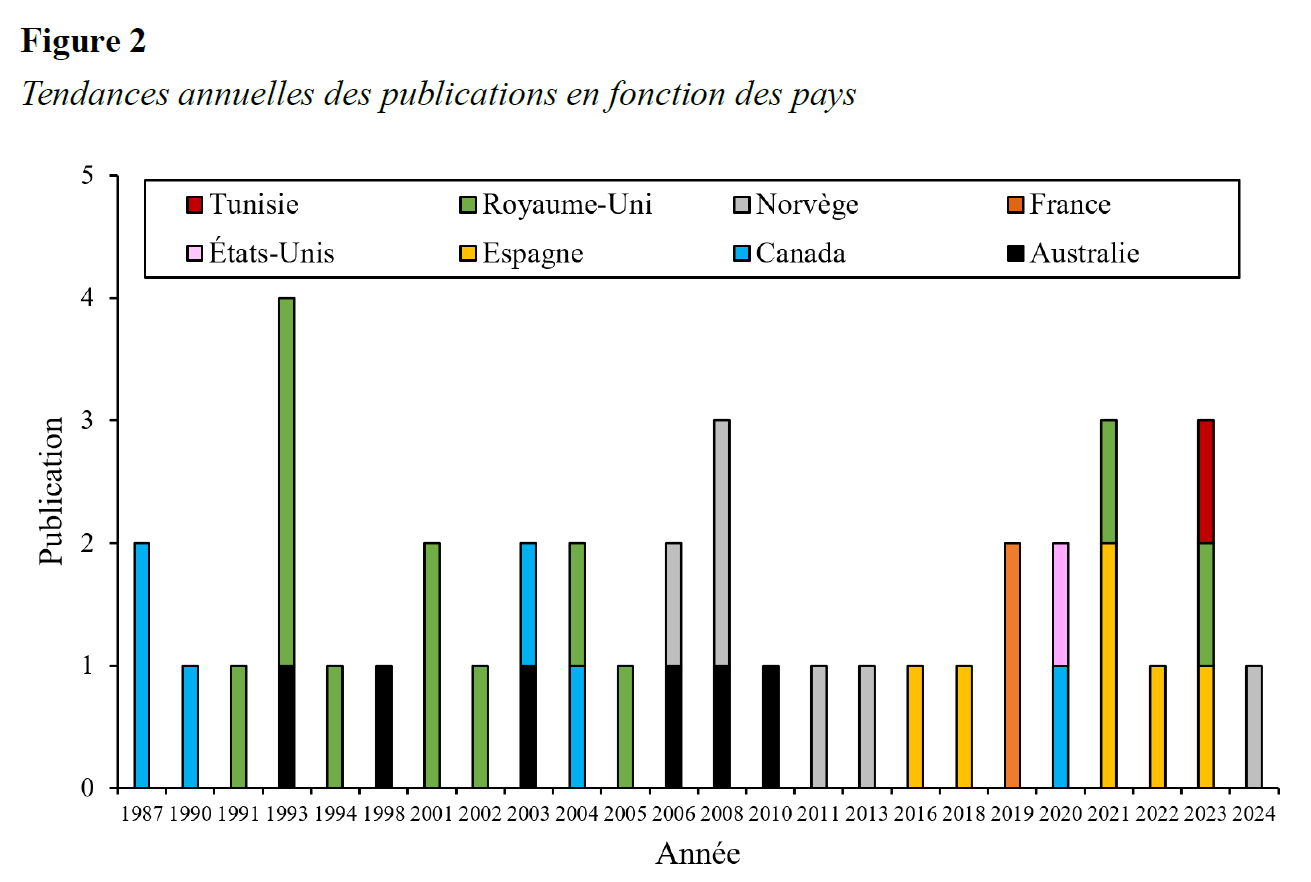
Internationally, more and more educational research is focusing on issues related to (hetero)sexism and 2SLGBTQIA+-phobia. However, since the 1980s, a number of publications have addressed issues related to these issues in the context of physical education teacher education programs. Building on and from this research, the present study proposes a critical review and update of the current state of the literature. The adopted approach not only aims to paint a picture of the evolution, scope, and nature of studies carried out in the field over the past 40 years, but also offers future perspectives on how to sensitively integrate these issues into physical education teaching and training programs. Through a scoping review of the literature, this historical re-view traces the different trajectories taken by the research. Notably, the analysis reveals many grey areas, including an intersectional analysis that can be described as selective or partial, the striking absence of 2SLGBTQIA+ individuals, and numerous worrying academic “silences.” However, despite these worrying elements, the analysis also reveals the ability of researchers and educators to highlight the issues in a way that demonstrates the need for action and change in the future.
Metrics
References
Ahmed, S. (2004). The cultural politics of emotion. Edinburgh University Press.
Ahmed, S. (2006). Queer phenomenology: Orientations, objects, others. Duke University Press. https://doi.org/10.2307/j.ctv125jk6w
Ahmed, S. (2017). Living a feminist life. Duke University Press.
Ahmed, S. (2021). Complaint! Duke University Press. https://doi.org/10.1215/9781478022336
Alfrey, L. et Jeanes, R. (2023). Challenging ableism and the ‘disability as problem’ discourse: How initial teacher education can support the inclusion of students with a disability in physical education. Sport, Education and Society, 28(3), 286299. https://doi.org/10.1080/13573322.2021.2019698
Arksey, H. et O’Malley, L. (2005). Scoping studies: Towards a methodological framework. International Journal of Social Research Methodology, 8(1), 1932. https://doi.org/10.1080/1364557032000119616
Barad, K. (2014). Diffracting diffraction: Cutting together-apart. Parallax, 20(3), 168187. https://doi.org/10.1080/13534645.2014.927623
Barad, K. M. (2007). Meeting the universe halfway: Quantum physics and the entanglement of matter and meaning. Duke University Press.
Benn, T. (1996). Muslim women and physical education in initial teacher training. Sport, Education and Society, 1(1), 521. https://doi.org/10.1080/1357332960010101
Benn, T. (2002). Muslim women in teacher training: Issues of gender, ‘race’ and religion. Dans D. Penney (dir.), Gender and Physical Education (p. 57–79). Routledge. https://doi.org/10.4324/9780203468883
Benn, T. et Dagkas, S. (2006). Incompatible? Compulsory mixed-sex Physical Education Initial Teacher Training (PEITT) and the inclusion of Muslim women: A case-study on seeking solutions. European Physical Education Review, 12(2), 181200. https://doi.org/10.1177/1356336X06065181
Bereni, L., Chauvin, S., Jaunait, A. et Revillard, A. (2008). Introduction aux gender studies : manuel des études sur le genre. De Boeck.
Berg, P. et Kokkonen, M. (2022). Heteronormativity meets queering in physical education: The views of PE teachers and LGBTIQ+ students. Physical Education and Sport Pedagogy, 27(4), 368381. https://doi.org/10.1080/17408989.2021.1891213
Berlant, L. (2010). Cruel optimism. Dans G. J. Seigworth et M. Gregg (dir.), The affect theory reader (p. 93117). Duke University Press. https://doi.org/10.1515/9780822393047-006
Blackshear, T. B. et Culp, B. (2023). Critical race studies in physical education. Human Kinetics.
Block, B. A. (2014). Supporting LGBTQ students in physical education: Changing the movement landscape. Quest, 66(1), 1426. https://doi.org/10.1080/00336297.2013.824904
Bramham, P. (2003). Boys, masculinities and PE. Sport, Education and Society, 8(1), 5771. https://doi.org/10.1080/1357332032000050060
Bréau, A., Hauw, D. et Lentillon-Kaestner, V. (2017). Séparer les filles et les garçons dans les classes d’éducation physique et sportive : état de la question. Revue canadienne des sciences du comportement, 49(3), 195208. https://doi.org/10.1037/cbs0000080
Brown, D. (2005). An economy of gendered practices? Learning to teach physical education from the perspective of Pierre Bourdieu’s embodied sociology. Sport, Education and Society, 10(1), 323.
Brown, D. et Evans, J. (2004). Reproducing gender? Intergenerational links and the male PE teacher as a cultural conduit in teaching physical education. Journal of Teaching in Physical Education, 23(1), 4870. https://doi.org/10.1123/jtpe.23.1.48
Brown, D. et Rich, E. (2002). Gender positioning as pedagogical practice in teaching physical education. Dans D. Penney (dir.), Gender and physical education (p. 80100). Routledge. https://doi.org/10.4324/9780203468883
Brown, L. (1998). « Boys » training’: The inner sanctum. Dans C. Hickey, L. Fitzclarence et R. Matthews (dir.), Where the boys are: Masculinity, sport and education (p. 8396). Deakin University Press.
Butler, J. (2005). Trouble dans le genre : pour un féminisme de la subversion (C. Kraus, trad.). La Découverte. (Ouvrage original publié en 1990)
Castro-García, M., Landi, D. et Kirk, D. (2023). deportigualízate: enacting critical intersectional feminist pedagogy in Spanish PESTE. Physical Education and Sport Pedagogy, 1–15. https://doi.org/10.1080/17408989.2023.2284927
Chapman, J., Sykes, H. et Swedberg, A. (2003). Wearing the secret out: Performing stories of sexual identities. Youth Theatre Journal, 17(1), 2737. https://doi.org/10.1080/08929092.2003.10012548
Chiva-Bartoll, O., Santos-Pastor, M. L., Martínez-Muñoz, L. F. et Ruiz-Montero, P. J. (2021). Contributions of service-learning to more inclusive and less gender-biased physical education: The views of Spanish physical education teacher education students. Journal of Gender Studies, 30(6), 699712. https://doi.org/10.1080/09589236.2021.1937079
Clarke, G. (1996). Conforming and contesting with (a) difference: How lesbian students and teachers manage their identities. International Studies in Sociology of Education, 6(2), 191209. https://doi.org/10.1080/0962021960060204
Clarke, G. (2006). Sexuality and physical education. Dans D. Kirk, D. Macdonald et M. O’Sullivan (dir.), Handbook of physical education (p. 723739). SAGE. https://doi.org/10.4135/9781848608009
Clarke, G. (2012). Challenging heterosexism, homophobia and transphobia in physical education. Dans G. Stidder et S. Hayes (dir.), Equity and inclusion in physical education and sport (p. 87101). Routledge. https://doi.org/10.4324/9780203132845
Cobhan, L. (1982). Lesbians in physical education and sport. Dans M. Cruikshank (dir.), Lesbian studies: Present and future (p. 178186). Feminist Press.
Combaz, G. et Hoibian, O. (2008). Le rôle de l’école dans la construction des inégalités de sexe. L’exemple de l’éducation physique et sportive. Travail, genre et sociétés, 20(2), 129150. https://doi.org/10.3917/tgs.020.0129
Couchot-Schiex, S. (2019). Du genre en éducation : pour des clés de compréhension d’une structure du social. L’Harmattan.
Daudt, H. M., van Mossel, C. et Scott, S. J. (2013). Enhancing the scoping study methodology: A large, inter-professional team’s experience with Arksey and O’Malley’s framework. BMC Medical Research Methodology, 13(1), article 48. https://doi.org/10.1186/1471-2288-13-48
Davis, K., Drey, N. et Gould, D. (2009). What are scoping studies? A review of the nursing literature. International Journal of Nursing Studies, 46(10), 13861400. https://doi.org/10.1016/j.ijnurstu.2009.02.010
Davisse, A. (1986). Les mixités en EPS. Revue EPS, (197), 5657.
Devís-Devís, J., Pereira-García, S., Fuentes-Miguel, J., López-Cañada, E. et Pérez-Samaniego, V. (2018a). Opening up to trans persons in physical education-sport tertiary education: Two case studies of recognition in queer pedagogy. Physical Education and Sport Pedagogy, 23(6), 623635. http://dx.doi.org/10.1080/17408989.2018.1485142
Devís-Devís, J., Pereira-García, S., López-Cañada, E., Pérez-Samaniego, V. et Fuentes-Miguel, J. (2018b). Looking back into trans persons’ experiences in heteronormative secondary physical education contexts. Physical Education and Sport Pedagogy, 23(1), 103116. https://doi.org/10.1080/17408989.2017.1341477
Dewar, A. (1987a). Knowledge and gender in physical education. Dans J. S. Gaskell et A. T. McLaren (dir.), Women and education: A Canadian perspective (p. 265288). Detselig Enterprises.
Dewar, A. (1987b). The social construction of gender in physical education. Women’s Studies International Forum, 10(4), 453465. https://doi.org/10.1016/0277-5395(87)90062-8
Dewar, A. (1990). Oppression and privilege in physical education: Struggles in the negotiation of gender in a university programme. Dans D. Kirk et R. Tinning (dir.), Physical education, curriculum and culture (p. 5478). Routledge.
Dewar, A. (1991). Feminist pedagogy in physical education: Promises, possibilities, and pitfalls. Journal of Physical Education, Recreation & Dance, 62(6), 6877. https://doi.org/10.1080/07303084.1991.10609898
Dowling, F. (2006). Physical education teacher educators’ professional identities, continuing professional development and the issue of gender equality. Physical Education and Sport Pedagogy, 11(3), 247263. https://doi.org/10.1080/17408980600986306
Dowling, F. (2008a). Getting in touch with our feelings: The emotional geographies of gender relations in PETE. Sport, Education and Society, 13(3), 247266. https://doi.org/10.1080/13573320802200560
Dowling, F. (2008b). Physical educators’ gender identities and embodied practice. Ágora para la educación física y el deporte, (6), 89108.
Dowling, F. (2013). Teacher educators’ gendered workplace tales. Dans G. Pfister et M. K. Sisjord (dir.), Gender and sport: Changes and challenges (p. 217231). Waxmann.
Dowling, F. et Kårhus, S. (2011). An analysis of the ideological work of the discourses of ‘fair play’ and moral education in perpetuating inequitable gender practices in PETE. Physical Education and Sport Pedagogy, 16(2), 197211. https://doi.org/10.1080/17408989.2010.532781
Drivet, N., Champely, S. et Ottogalli-Mazzacavallo, C. (2019a). Regard sur l’hétéronormativité au sein d’une UFR STAPS : la normalisation des corps en jeu. Staps, 124(2), 4358. https://doi.org/10.3917/sta.124.0043
Drivet, N., Ottogalli-Mazzacavallo, C. et Liotard, P. (2019b). ModulEO : Module pédagogique d’Education à l’Orientation – Une innovation pour la déconstruction des stéréotypes en L1 STAPS ? Genre Éducation Formation, (3). https://doi.org/10.4000/gef.355
Elandoulsi, S. et Amade-Escot, C. (2023). Cécité didactique des stagiaires et de leur formatrice au regard de la mixité en EPS en Tunisie : études de cas lors du stage de préparation professionnelle. Dans I. Collet et I. Verscheure (dir.), Genre: didactique(s) et pratiques d’enseignement. Perspectives francophones (p. 7987). Peter Lang.
Fagrell, B., Larsson, H. et Redelius, K. (2012). The game within the game: girls’ underperforming position in physical education. Gender and Education, 24(1), 101118. https://doi.org/10.1080/09540253.2011.582032
Flatschart, E. (2017). Feminist standpoints and critical realism. The contested materiality of difference in intersectionality and new materialism. Journal of Critical Realism, 16(3), 284302. https://doi.org/10.1080/14767430.2017.1313650
Flintoff, A. (1991). Dance, masculinity and teacher education. The British Journal of Physical Education, 22(4), 3135.
Flintoff, A. (1993). Gender, physical education and initial teacher education. Dans J. Evans (dir.), Equality, education, and physical education (p. 184204). Routledge.
Flintoff, A. (1994a). One of the boys? Gender identities in physical education initial teacher education. Dans I. Siraj-Blatchford (dir.), ‘Race’, gender and the education of teachers (p. 7493). Open University Press.
Flintoff, A. (1994b). Sexism and homophobia in physical education: The challenge for teacher educators. Physical Education Review, 17(2), 97105.
Flintoff, A. (2014). Tales from the playing field: Black and minority ethnic students’ experiences of physical education teacher education. Race, Ethnicity and Education, 17(3), 346366. https://doi.org/10.1080/13613324.2013.832922
Flintoff, A. (2015). Playing the « race » card? Black and minority ethnic students’ experiences of physical education teacher education. Sport, Education and Society, 20(2), 190211. https://doi.org/10.1080/13573322.2012.745397
Flintoff, A. et Webb, L. (2012). ‘Just open your eyes a bit more’: the methodological challenges of researching black and minority ethnic students’ experiences of physical education teacher education. Sport, Education and Society, 17(5), 571589. https://doi.org/10.1080/13573322.2011.553951
Flintoff, A., Fitzgerald, H. et Scraton, S. (2008). The challenges of intersectionality: Researching difference in physical education. International Studies in Sociology of Education, 18(2), 7385. https://doi.org/10.1080/09620210802351300
Forestier, A. et Larsson, H. (2023). Choreographing gender: Masculine domination and heteronormativity in physical education. Sport, Education and Society, 28(2), 132143. https://doi.org/10.1080/13573322.2021.1997980
Gard, M. (2003). Being someone else: Using dance in anti-oppressive teaching. Educational Review, 55(2), 211223. https://doi.org/10.1080/0013191032000072236
Garrett, R. (2006). Critical storytelling as a teaching strategy in physical education teacher education. European Physical Education Review, 12(3), 339360. https://doi.org/10.1177/1356336X06069277
Geerts, E. et van der Tuin, I. (2021). Almanac: Diffraction & reading diffractively. Matter: Journal of New Materialist Research, 3(1), 173177. https://doi.org/10.1344/jnmr.v2i1.33380
Giese, M. et Ruin, S. (2018). Forgotten bodies – an examination of physical education from the perspective of ableism. Sport in Society, 21(1), 152165. https://doi.org/10.1080/17430437.2016.1225857
Gray, E. M. (2013). Coming out as a lesbian, gay or bisexual teacher: Negotiating private and professional worlds. Sex Education, 13(6), 702714. https://doi.org/10.1080/14681811.2013.807789
Griffin, P. (1991). Identity management strategies among lesbian and gay educators. International Journal of Qualitative Studies in Education, 4(3), 189202. https://doi.org/10.1080/0951839910040301
Guyan, K. (2022). Queer data: Using gender, sex and sexuality data for action. Bloomsbury.
Hargie, O. D., Mitchell, D. H. et Somerville, I. J. (2017). ‘People have a knack of making you feel excluded if they catch on to your difference’: Transgender experiences of exclusion in sport. International Review for the Sociology of Sport, 52(2), 223239. https://doi.org/10.1177/1012690215583283
Hargreaves, A. (2000). Mixed emotions: Teachers’ perceptions of their interactions with students. Teaching and Teacher Education, 16(8), 811826. https://doi.org/10.1016/S0742-051X(00)00028-7
Heinrichs, D. et Andriani, D. (2022). Moving beyond (critical) reflection towards diffraction: A composting guide for world language(s) education.
Henning, A. et Andreasson, J. (2022). Hegemony and sport: Power through culture in theory and practice. Common Ground Research Networks. https://doi.org/10.18848/978-1-957792-21-7/CGP
Hickey, C. (2008). Physical education, sport and hyper-masculinity in schools. Sport, Education and Society, 13(2), 147161. https://doi.org/10.1080/13573320801957061
Hill, C. M. (2017). More-than-reflective practice: Becoming a diffractive practitioner. Teacher Learning and Professional Development, 2(1), 1–17. https://journals.sfu.ca/tlpd/index.php/tlpd/article/view/28
hooks, bell. (2000). Feminism is for everybody: Passionate politics. South End Press.
Joy, P., Zahavich, J. B. L. et Kirk, S. F. L. (2021). Gendered bodies and physical education (PE) participation: Exploring the experiences of adolescent students and PE teachers in Nova Scotia. Journal of Gender Studies, 30(6), 663675. https://doi.org/10.1080/09589236.2021.1937080
Keyworth, S. A. (2001). Critical autobiography: ‘Straightening’ out dance education. Research in Dance Education, 2(2), 117137. https://doi.org/10.1080/14647890120100764
Keyworth, S.A. (2001). Critical autobiography: out dance education. Research in Dance Education, 2(2), 117137.
Kidd, B. (2013). Sports and masculinity. Sport in Society, 16(4), 553564. https://doi.org/10.1080/17430437.2013.785757
Kirk, D. (2009). Physical education futures. Routledge. https://doi.org/10.4324/9780203874622
Kirk, D. (2019). Precarity, critical pedagogy and physical education. Routledge. https://doi.org/10.4324/9780429326301
Landi, D. (2018). Toward a queer inclusive physical education. Physical Education & Sport Pedagogy, 23(1), 115. https://doi.org/10.1080/17408989.2017.1341478
Landi, D. (2019). Queer men, affect, and physical education. Qualitative Research in Sport, Exercise and Health, 11(2), 168187. https://doi.org/10.1080/2159676X.2018.1504230
Landi, D., Flory, S. B., Safron, C. et Marttinen, R. (2020). LGBTQ Research in physical education: A rising tide? Physical Education and Sport Pedagogy, 25(3), 259273. https://doi.org/10.1080/17408989.2020.1741534
Lappalainen, S., Hakala, K., Lahelma, E., Mietola, R., Niemi, A.-M., Salo, U.-M. et Tolonen, T. (2022). Feminist ethnography as ‘Troublemaker’ in educational research: Analysing barriers of social justice. Ethnography and Education, 18(1), 3856. https://doi.org/10.1080/17457823.2022.2122855
Larsson, H., Fagrell, B. et Redelius, K. (2009). Queering physical education. Between benevolence towards girls and a tribute to masculinity. Physical Education and Sport Pedagogy, 14(1), 117. https://doi.org/10.1080/17408980701345832
Larsson, H., Mattsson, T. et Ferry, M. (2022). (Non-)Diversity and cultural (re)production in physical education teacher education: A Swedish example. Curriculum Studies in Health and Physical Education, 13(1), 318. https://doi.org/10.1080/25742981.2021.1979416
Larsson, H., Nyberg, G. et Barker, D. (2021). Juggling with gender. How gender promotes and prevents the learning of a specific movement activity among secondary school students. Gender and Education, 33(5), 531546. https://doi.org/10.1080/09540253.2020.1792846
Larsson, H., Quennerstedt, M. et Öhman, M. (2014). Heterotopias in physical education: Towards a queer pedagogy? Gender and Education, 26(2), 135150. https://doi.org/10.1080/09540253.2014.888403
Larsson, H., Redelius, K. et Fagrell, B. (2011). Moving (in) the heterosexual matrix. On heteronormativity in secondary school physical education. Physical Education and Sport Pedagogy, 16(1), 6781. https://doi.org/10.1080/17408989.2010.491819
Larsson, L., Linnér, S. et Schenker, K. (2018). The doxa of physical education teacher education – set in stone? European Physical Education Review, 24(1), 114130. https://doi.org/10.1177/1356336X16668545
Lawson, H. A. (1983). Toward a model of teacher socialization in physical education: The subjective warrant, recruitment, and teacher education. Journal of Teaching in Physical Education, 2(3), 316. https://doi.org/10.1123/jtpe.2.3.3
Lieber, M. (2009). Laure Bereni, Sébastien Chauvin, Alexandre Jaunait et Anne Revillard : Introduction aux gender studies. Manuel des études sur le genre [Compte rendu]. Nouvelles Questions Féministes, 28(3), 135138. https://doi.org/10.3917/nqf.283.0135
lisahunter. (2019). What a queer space is HPE, or is it yet? Queer theory, sexualities and pedagogy. Sport, Education & Society, 24(1), 112. https://doi.org/10.1080/13573322.2017.1302416
Llewellyn, A. et Reynolds, K. (2021). Within and between heteronormativity and diversity: Narratives of LGB teachers and coming and being out in schools. Sex Education, 21(1), 1326. https://doi.org/10.1080/14681811.2020.1749040
Lynch, S. et Curtner-Smith, M. (2020). Faculty members engaging in transformative PETE: A feminist perspective. Sport, Education and Society, 25(1), 4356. https://doi.org/10.1080/13573322.2018.1560255
Macdonald, D. (1993). Knowledge, gender and power in physical education teacher education. Australian
Journal of Education, 37(3), 259278. https://doi.org/10.1177/000494419303700304
Maynard, M. (2002). Studying age, ‘race’ and gender: Translating a research proposal into a project. International Journal of Social Research Methodology, 5(1), 3140. https://doi.org/10.1080/13645570110098055
McBride, R.-S. (2021). A literature review of the secondary school experiences of trans youth. Journal of LGBT Youth, 18(2), 103134. https://doi.org/10.1080/19361653.2020.1727815
McCaughey, C. et Fletcher, T. (2020). Pre-service teachers’ experiences of learning to teach LGBTQ students in health and physical education. PHEnex Journal, 11(1), article 4088. https://ojs.acadiau.ca/index.php/phenex/article/view/4088
McCullick, B. A., Lux, K. M., Belcher, D. G. et Davies, N. (2012). A portrait of the PETE major: Re-touched for the early twenty-first century. Physical Education and Sport Pedagogy, 17(2), 177193. https://doi.org/10.1080/17408989.2011.565472
McVeigh, J. et Waring, M. (2021). Developing the pedagogical practice of physical education pre-service teachers in gymnastics: Exploring gendered embodiment. Physical Education and Sport Pedagogy, 28(4), 397410. https://doi.org/10.1080/17408989.2021.1990246
Mennesson, C. (2005). Être une femme dans le monde des hommes : socialisation sportive et construction du genre. L’Harmattan.
Metcalfe, S. (2018). Adolescent constructions of gendered identities: The role of sport and (physical) education. Sport, Education and Society, 23(7), 681693. https://doi.org/10.1080/13573322.2018.1493574
Müller, J. et Böhlke, N. (2021). Physical education from LGBTQ+ students’ perspective. A systematic review of qualitative studies. Physical Education and Sport Pedagogy, 28(6), 601616. https://doi.org/10.1080/17408989.2021.2014434
Munn, Z., Peters, M. D. J., Stern, C., Tufanaru, C., McArthur, A. et Aromataris, E. (2018). Systematic review or scoping review? Guidance for authors when choosing between a systematic or scoping review approach. BMC Medical Research Methodology, 18, article 143. https://doi.org/10.1186/s12874-018-0611-x
Murray, Ó. M., Crowley, M. et Wånggren, L. (2017). Feminist work in academia and beyond. Dans R. Thwaites et A. Pressland (dir.), Being an early career feminist academic: Global perspectives, experiences and challenges (p. 215235). Palgrave Macmillan. https://doi.org/10.1057/978-1-137-54325-7_11
Murris, K. et Bozalek, V. (2019). Diffracting diffractive readings of texts as methodology: Some propositions. Educational Philosophy and Theory, 51(14), 15041517. https://doi.org/10.1080/00131857.2019.1570843
Neary, A. et McBride, R.-S. (2021). Beyond inclusion: Trans and gender diverse young people’s experiences of PE and school sport. Sport, Education and Society, 29(5), 593606. https://doi.org/10.1080/13573322.2021.2017272
O’Brien, K. S., Shovelton, H. et Latner, J. D. (2013). Homophobia in physical education and sport: The role of physical/sporting identity and attributes, authoritarian aggression, and social dominance orientation. International Journal of Psychology, 48(5), 891899. https://doi.org/10.1080/00207594.2012.713107
Ovens, A. (2016). Transformative aspirations and realities in physical education teacher education (PETE). Dans C. D. Ennis, K. Armour, A. Chen, A. C. Garn, E. Mauerberg-deCastro, D. Penney, S. J. Silverman, M. A. Solon et R. Tinning (dir.), Routledge handbook of physical education pedagogies (p. 295306). Routledge.
Penney, D. (2002). Gendered policies. Dans D. Penney (dir.), Gender and physical education (p. 103122). Routledge.
Pereira-García, S., López-Cañada, E. et Elling-Machartzki, A. (2022). Dancing queer tango: An experience of queer pedagogy in PESTE. Journal of Teaching in Physical Education, 41(1), 99109. https://doi.org/10.1123/jtpe.2020-0097
Pérez-Samaniego, V., Fuentes-Miguel, J., Pereira-García, S. et Devís-Devís, J. (2016). Abjection and alterity in the imagining of transgender in physical education and sport: A pedagogical approach in higher education. Sport, Education and Society, 21(7), 9851002. https://doi.org/10.1080/13573322.2014.981253
Peters, M. D. J., Godfrey, C. M., Khalil, H., McInerney, P., Parker, D. et Soares, C. B. (2015). Guidance for conducting systematic scoping reviews. International Journal of Evidence-Based Healthcare, 13(3), 141146. https://doi.org/10.1097/XEB.0000000000000050
Peters, M. D. J., Godfrey, C., McInerney, P., Khalil, H., Larsen, P., Marnie, C., Pollock, D., Tricco, A. C. et Munn, Z. (2022). Best practice guidance and reporting items for the development of scoping review protocols. JBI Evidence Synthesis, 20(4), 953968. https://doi.org/10.11124/JBIES-21-00242
Peters, M. D. J., Marnie, C., Colquhoun, H., Garritty, C. M., Hempel, S., Horsley, T., Langlois, E. V., Lillie, E., O’Brien, K. K., Tunçalp, Ӧ., Wilson, M. G., Zarin, W. et Tricco, A. C. (2021). Scoping reviews: Reinforcing and advancing the methodology and application. Systematic Reviews, 10, article 263. https://doi.org/10.1186/s13643-021-01821-3
Peters, M. D. J., Marnie, C., Tricco, A. C., Pollock, D., Munn, Z., Alexander, L., McInerney, P., Godfrey, C. M. et Khalil, H. (2020). Updated methodological guidance for the conduct of scoping reviews. JBI Evidence Synthesis, 18(10), 21192126. https://doi.org/10.11124/JBIES-20-00167
Pham, M. T., Rajić, A., Greig, J. D., Sargeant, J. M., Papadopoulos, A. et McEwen, S. A. (2014). A scoping review of scoping reviews: Advancing the approach and enhancing the consistency. Research Synthesis Methods, 5(4), 371385. https://doi.org/10.1002/jrsm.1123
Pringle, R. et Landi, D. (2023). Queering school sport and physical education. Dans N. M. Rodriguez, R. C. Mizzi, L. Allen et R. Cover (dir.), Queer studies and education (p. 216232). Oxford University Press. https://strathprints.strath.ac.uk/85769/
Pringle, R., Larsson, H. et Gerdin, G. (2018). Critical research in sport, health and physical education: How to make a difference. Routledge. https://doi.org/10.4324/9780203702598
Rich, E. (2001). Gender positioning in teacher education in England: New rhetoric, old realities. International Studies in Sociology of Education, 11(2), 131156. https://doi.org/10.1080/09620210100200072
Richard, G. (2019). Hétéro, l’école? Plaidoyer pour une éducation antioppressive à la sexualité. Éditions du remue-ménage.
Roberts, J. S., Gray, S. et Camacho Miñano, M. J. (2020). Exploring the PE contexts and experiences of girls who challenge gender norms in a progressive secondary school. Curriculum Studies in Health and Physical Education, 11(1), 317. https://doi.org/10.1080/25742981.2019.1696688
Robinson, B. A. (2016). Heteronormativity and homonormativity. Dans N. Naples (dir.), The Wiley Blackwell encyclopedia of gender and sexuality studies (p. 13). John Wiley & Sons. https://doi.org/10.1002/9781118663219.wbegss013
Robinson, D. B. et Randall, L. (dir.). (2016). Social justice in physical education: Critical reflections and pedagogies for change. Canadian Scholars’ Press.
Ropers-Huilman, R. et Winters, K. T. (2011). Feminist research in higher education. The Journal of Higher Education, 82(6), 667690. https://doi.org/10.1080/00221546.2011.11777223
Rossi, T., Sirna, K. et Tinning, R. (2008). Becoming a health and physical education (HPE) teacher: Student teacher ‘performances’ in the physical education subject department office. Teaching and Teacher Education, 24(4), 10291040. https://doi.org/10.1016/j.tate.2007.11.005
Sánchez-Hernández, N., Martos-García, D., Soler, S. et Flintoff, A. (2018). Challenging gender relations in PE through cooperative learning and critical reflection. Sport, Education and Society, 23(8), 812823. https://doi.org/10.1080/13573322.2018.1487836
Saraç, L. et McCullick, B. (2017). The life of a gay student in a university physical education and sports department: A case study in Turkey. Sport, Education and Society, 22(3), 338354. https://doi.org/10.1080/13573322.2015.1036232
Scanlon, D., Walsh, C., Moody, B., Loughnane, M., Kelly, P., McManus, M. et Browne, D. (2023). “One good idea”: A physical education teacher education project advocating for LGBTQ+ students in school physical education. Journal of Physical Education, Recreation & Dance, 94(1), 1217. https://doi.org/10.1080/07303084.2022.2136314
Scraton, S. (1992). Shaping up to womanhood: Gender and girls’ physical education. Open University Press.
Scraton, S. (2018a). Feminism and PE: Does gender still matter? Dans L. Mansfield, J. Caudwell, B. Wheaton et B. Watson (dir.), The Palgrave handbook of feminism and sport, leisure and physical education (p. 2542). Palgrave Macmillan. https://doi.org/10.1057/978-1-137-53318-0_3
Scraton, S. (2018b). Feminism(s) and PE: 25 years of shaping up to womanhood. Sport, Education and Society, 23(7), 638651. https://doi.org/10.1080/13573322.2018.1448263
Scraton, S. J. (1986). Images of femininity and the teaching of girls’ physical education. Dans J. Evans (dir.), Physical Education, Sport and Schooling (p. 7194). Routledge.
Serra, P., Soler, S., Prat, M., Vizcarra, M. T., Garay, B. et Flintoff, A. (2018). The (in)visibility of gender knowledge in the physical activity and sport science degree in Spain. Sport, Education and Society, 23(4), 324338. https://doi.org/10.1080/13573322.2016.1199016
Sirna, K., Tinning, R. et Rossi, T. (2010). Social processes of health and physical education teachers’ identity formation: Reproducing and changing culture. British Journal of Sociology of Education, 31(1), 7184. https://doi.org/10.1080/01425690903385501
Skelton, A. (1993). On becoming a male physical education teacher: The informal culture of students and the construction of hegemonic masculinity. Gender and Education, 5(3), 289303. https://doi.org/10.1080/0954025930050305
Statistics Canada. (2021, 15 juin). A statistical portrait of Canada’s diverse LGBTQ2+ communities (catalogue no 11-001-X). The Daily. https://www150.statcan.gc.ca/n1/daily-quotidien/210615/dq210615a-eng.htm
Stirrup, J. et Hooper, O. (2021). Critical pedagogies in physical education, physical activity and health. Routledge. https://doi.org/10.4324/9781003003991
Sykes, H. et Goldstein, T. (2004). From performed to performing ethnography: Translating life history research into anti-homophobia curriculum for a teacher education program. Teaching Education, 15(1), 4161. https://doi.org/10.1080/1047621042000179989
Sykes, H. J. (2011). Queer bodies: Sexualities, genders, and fatness in physical education. Peter Lang.
Thorjussen, I. M. et Wilhelmsen, T. (2024). Discourses of resistance: Pre-service teachers’ reflections on the challenges of inclusion in physical education. Sport, Education and Society, 1‑14. https://doi.org/10.1080/13573322.2024.2329570
Tricco, A. C., Lillie, E., Zarin, W., O’Brien, K. K., Colquhoun, H., Levac, D., Moher, D., Peters, M. D. J., Horsley, T., Weeks, L., Hempel, S., Akl, E. A., Chang, C., McGowan, J., Stewart, L., Hartling, L., Aldcroft, A., Wilson, M. G., Garritty, C., … Straus, S. E. (2018). PRISMA extension for scoping reviews (PRISMA-ScR): Checklist and explanation. Annals of Internal Medicine, 169(7), 467473. https://doi.org/10.7326/M18-0850
Tricco, A. C., Lillie, E., Zarin, W., O’Brien, K., Colquhoun, H., Kastner, M., Levac, D., Ng, C., Sharpe, J. P., Wilson, K., Kenny, M., Warren, R., Wilson, C., Stelfox, H. T. et Straus, S. E. (2016). A scoping review on the conduct and reporting of scoping reviews. BMC Medical Research Methodology, 16, article 15. https://doi.org/10.1186/s12874-016-0116-4
Vertinsky, P. A. (1992). Reclaiming space, revisioning the body: The quest for gender-sensitive physical education. Quest, 44(3), 373396. https://doi.org/10.1080/00336297.1992.10484063
Vigneron, C. (2006). Les inégalités de réussite en EPS entre filles et garçons : déterminisme biologique ou fabrication scolaire ? Revue française de pédagogie, (154), 111124. https://doi.org/10.4000/rfp.146
Vilanova, A., Mateu, P., Gil-Quintana, J., Hinojosa-Alcalde, I. et Hartmann-Tews, I. (2022). Facing hegemonic masculine structures: Experiences of gay men studying physical activity and sport science in Spain. Sport, Education and Society, 29(5), 607621. https://doi.org/10.1080/13573322.2022.2103666
Wilkins, C. et Lall, R. (2011). ‘You’ve got to be tough and I’m trying’: Black and minority ethnic student teachers’ experiences of initial teacher education. Race Ethnicity and Education, 14(3), 365386. https://doi.org/10.1080/13613324.2010.543390
Woods, S. E. et Harbeck, K. M. (1992). Living in two worlds: The identity management strategies used by lesbian physical educators. Journal of Homosexuality, 22(3-4), 141166. https://doi.org/10.1300/J082v22n03_06
Youdell, D. (2005). Sex–gender–sexuality: How sex, gender and sexuality constellations are constituted in secondary schools. Gender and Education, 17(3), 249270. https://doi.org/10.1080/09540250500145148
Youdell, D. (2011). School trouble: Identity, power and politics in education. Routledge. https://doi.org/10.4324/9780203839379
Downloads
Additional Files
Published
How to Cite
Issue
Section
License
Copyright (c) 2025 Canadian Society for the Study of Education

This work is licensed under a Creative Commons Attribution-NonCommercial-NoDerivatives 4.0 International License.
The Canadian Journal of Education follows Creative Commons Licencing CC BY-NC-ND.